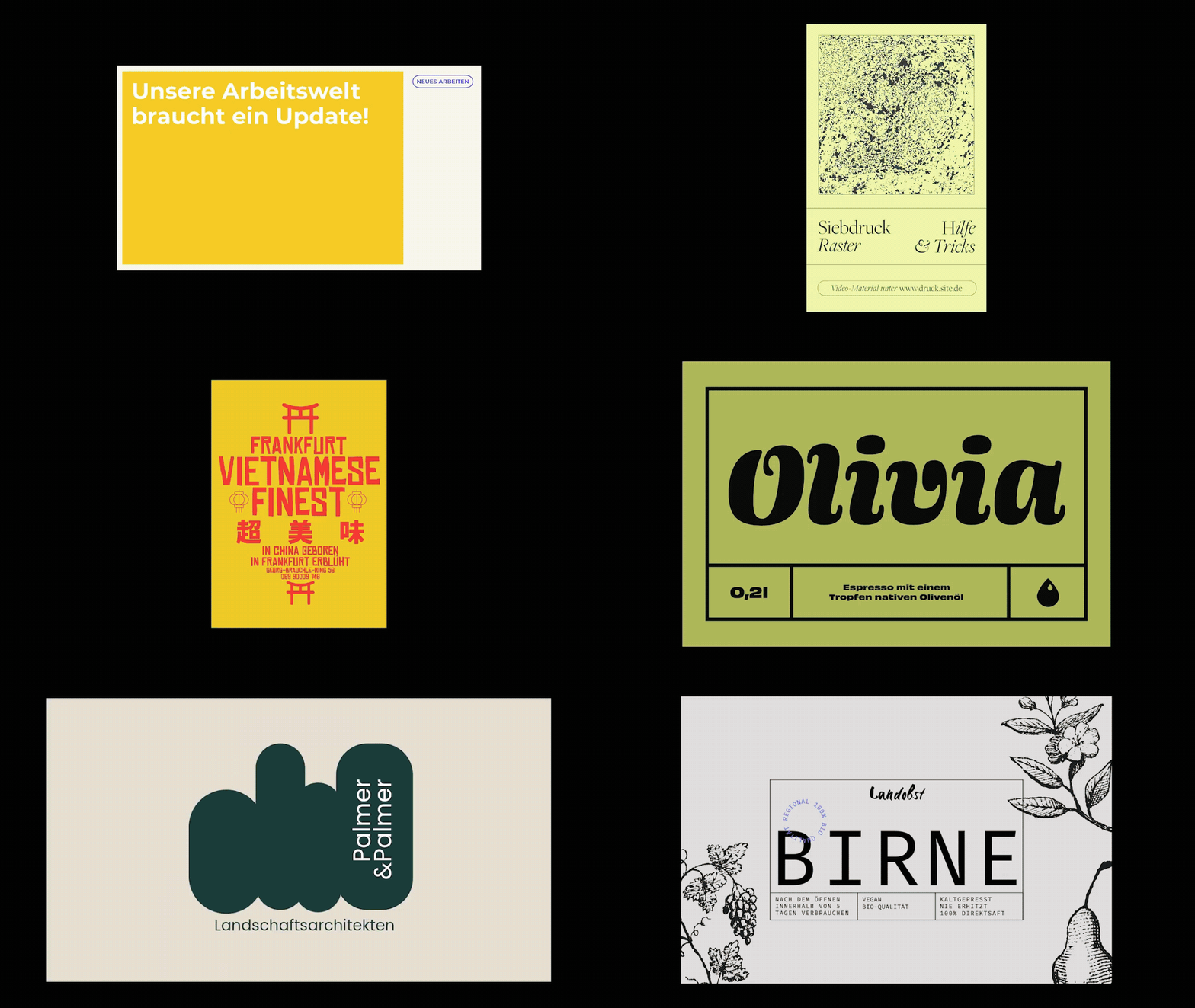
CONTENT STRATEGY & SYSTEMS FOR ADOBE EXPRESS
Client: Adobe Inc
Product Launch / Growth Strategy
Focus: Content Strategy · Systems Thinking · Data-informed Planning · Cross-functional Collaboration
At Adobe Express, I worked across content strategy, design operations and market planning, with a focus on improving how content was identified, planned and produced across European markets.
Client: Adobe Inc
Product Launch / Growth Strategy
Focus: Content Strategy · Systems Thinking · Data-informed Planning · Cross-functional Collaboration
At Adobe Express, I worked across content strategy, design operations and market planning, with a focus on improving how content was identified, planned and produced across European markets.
Role and Responsibilities
My role increasingly moved upstream: analysing existing systems and user behaviour, identifying gaps and opportunities, and translating these findings into frameworks and strategic directions for cross-functional teams.
I developed frameworks to improve content quality, reduce friction in creative workflows, and support scalable production across multiple markets. This included analysing structural gaps in existing systems, redefining how content needs were identified, and building clear structures for weekly briefings, requirements, and collaboration.
I developed frameworks to improve content quality, reduce friction in creative workflows, and support scalable production across multiple markets. This included analysing structural gaps in existing systems, redefining how content needs were identified, and building clear structures for weekly briefings, requirements, and collaboration.
Understanding the System
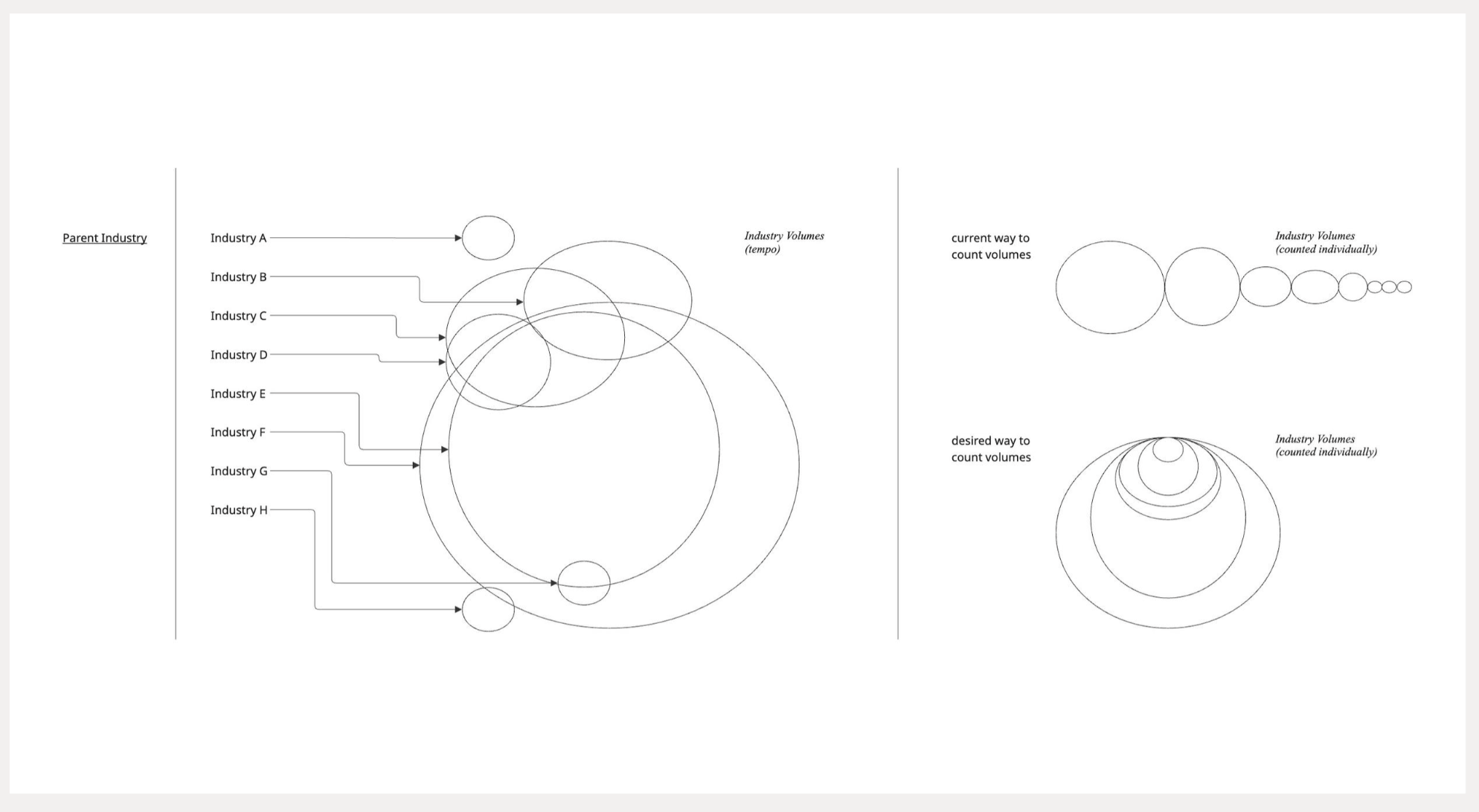
Adobe Express operated across multiple markets, content categories and production teams. Before looking for individual solutions, I mapped how information, requirements and decisions moved through the existing system.
This helped surface recurring gaps between market needs, content planning and creative production, and showed where clearer structures could reduce friction.
![]()
![]()
![]()
This helped surface recurring gaps between market needs, content planning and creative production, and showed where clearer structures could reduce friction.


Finding Gaps and Patterns
By doing workshops with market teams, designers and existing content data, I looked for recurring gaps between what users were searching for, what markets needed and what the content system was currently providing.
Rather than treating these as isolated requests, I grouped recurring signals into patterns that could inform broader planning decisions.
![]()
![]()
![]()
Rather than treating these as isolated requests, I grouped recurring signals into patterns that could inform broader planning decisions.

Using Data to Identify Opportunities
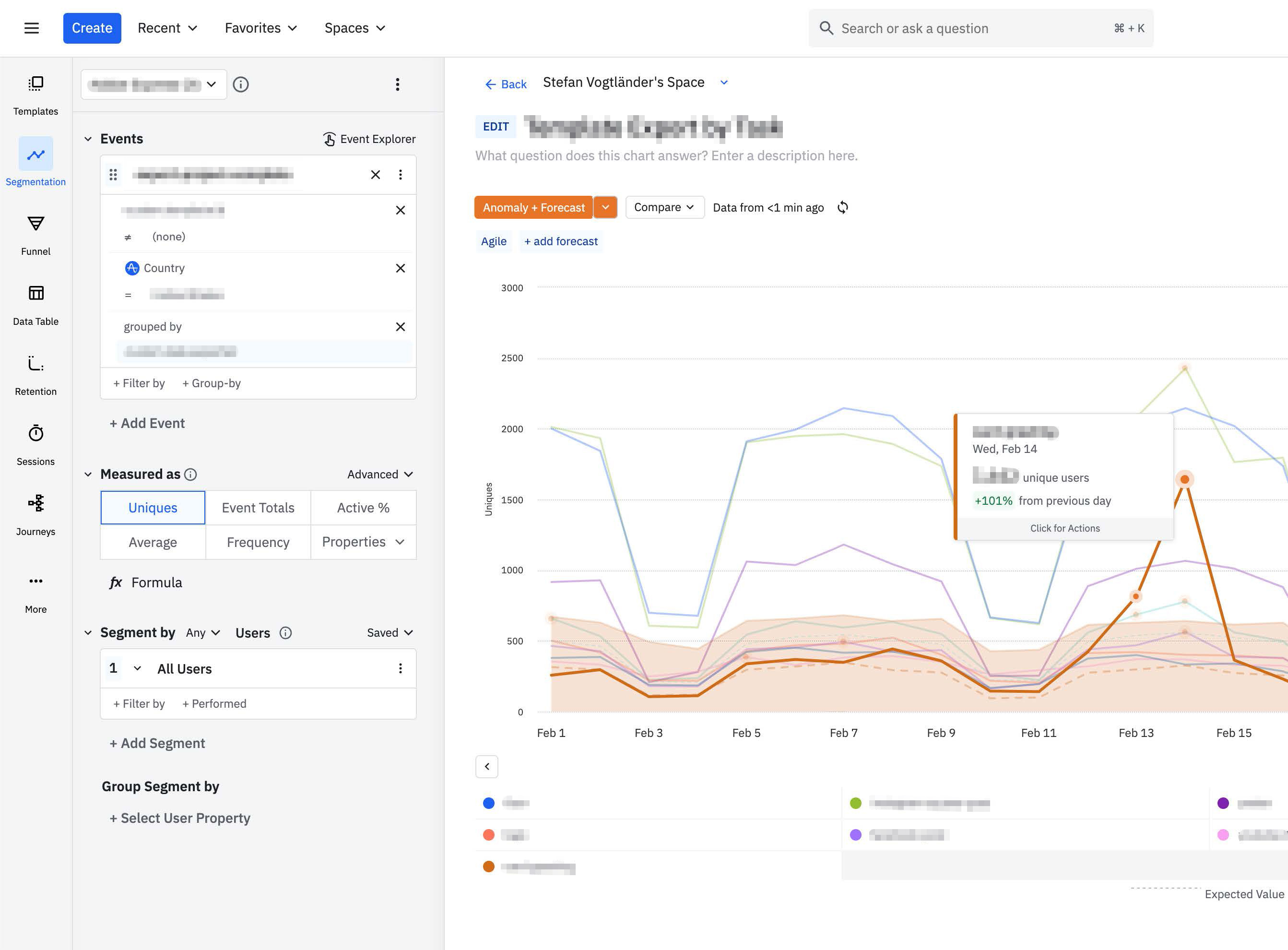
Behavioral data added another layer to this process. Using Amplitude and seasonal forecasting, I analysed how demand changed around cultural and seasonal moments rather than relying only on assumptions or previous content calendars.
One analysis revealed a 300%+ increase in demand for printed cards around Valentine’s Day. While social content also increased, the disproportionate rise in print-related demand pointed to a more specific user need.
![]()
One analysis revealed a 300%+ increase in demand for printed cards around Valentine’s Day. While social content also increased, the disproportionate rise in print-related demand pointed to a more specific user need.
From Signal to Strategic Direction
The finding shifted the question from what Valentine’s content should we produce? to how could Adobe Express respond to an emerging print use case?
This led to a recommendation to prepare earlier for the seasonal peak and explore a partner-led print activation, connecting digital creation with physical output. My role was to identify the opportunity and frame the direction; specialist teams could then take it forward.
SIGNAL
+300% printed-card demand
↓
PATTERN
Disproportionate interest in physical output
↓
OPPORTUNITY
Connect digital creation with print
↓
DIRECTION
Explore partner-led seasonal activation
This led to a recommendation to prepare earlier for the seasonal peak and explore a partner-led print activation, connecting digital creation with physical output. My role was to identify the opportunity and frame the direction; specialist teams could then take it forward.
SIGNAL
+300% printed-card demand
↓
PATTERN
Disproportionate interest in physical output
↓
OPPORTUNITY
Connect digital creation with print
↓
DIRECTION
Explore partner-led seasonal activation
Turning Insights into Systems
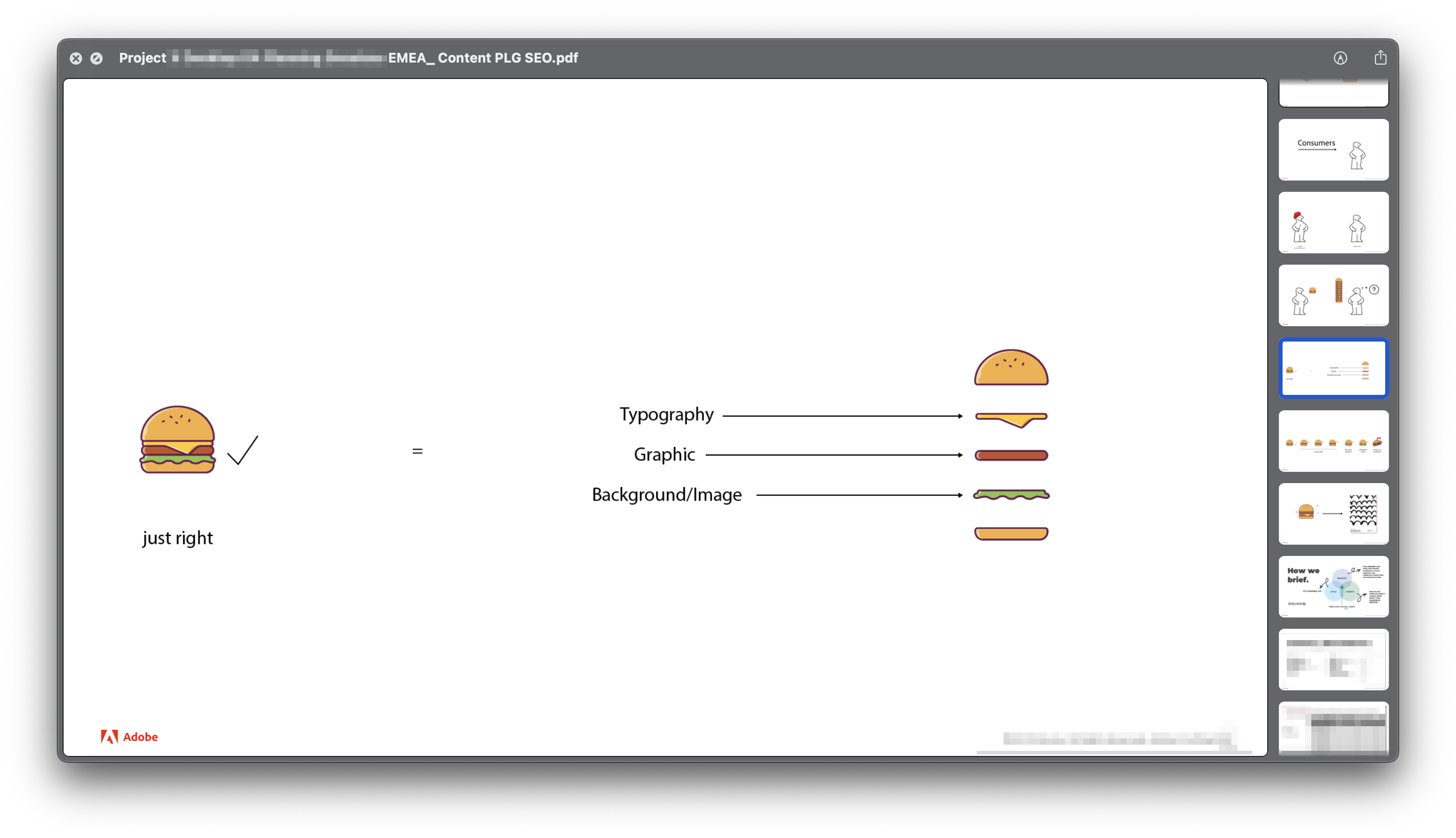
The same approach informed broader operational work. Insights from markets, design teams and content performance were translated into playbooks, guidelines and planning frameworks that could be reused across teams.
These systems helped create clearer inputs for creative production while maintaining enough flexibility for local market needs.
![]()
![]()
These systems helped create clearer inputs for creative production while maintaining enough flexibility for local market needs.


Working Across Markets
The work required continuous alignment across market, design, product, SEO, localisation and content teams. Different markets often surfaced different requirements, so the goal was not to impose one universal solution, but to identify what should be standardised and where local flexibility was necessary.
![]()

Outcome
The work moved content planning away from isolated requests toward a more systematic approach based on user behaviour, market signals and reusable frameworks.
For me, it also marked an important shift in my own practice: from primarily developing creative solutions to identifying the patterns and opportunities that should shape them in the first place.
![]()
![]()
For me, it also marked an important shift in my own practice: from primarily developing creative solutions to identifying the patterns and opportunities that should shape them in the first place.